
Mugen / 夢幻
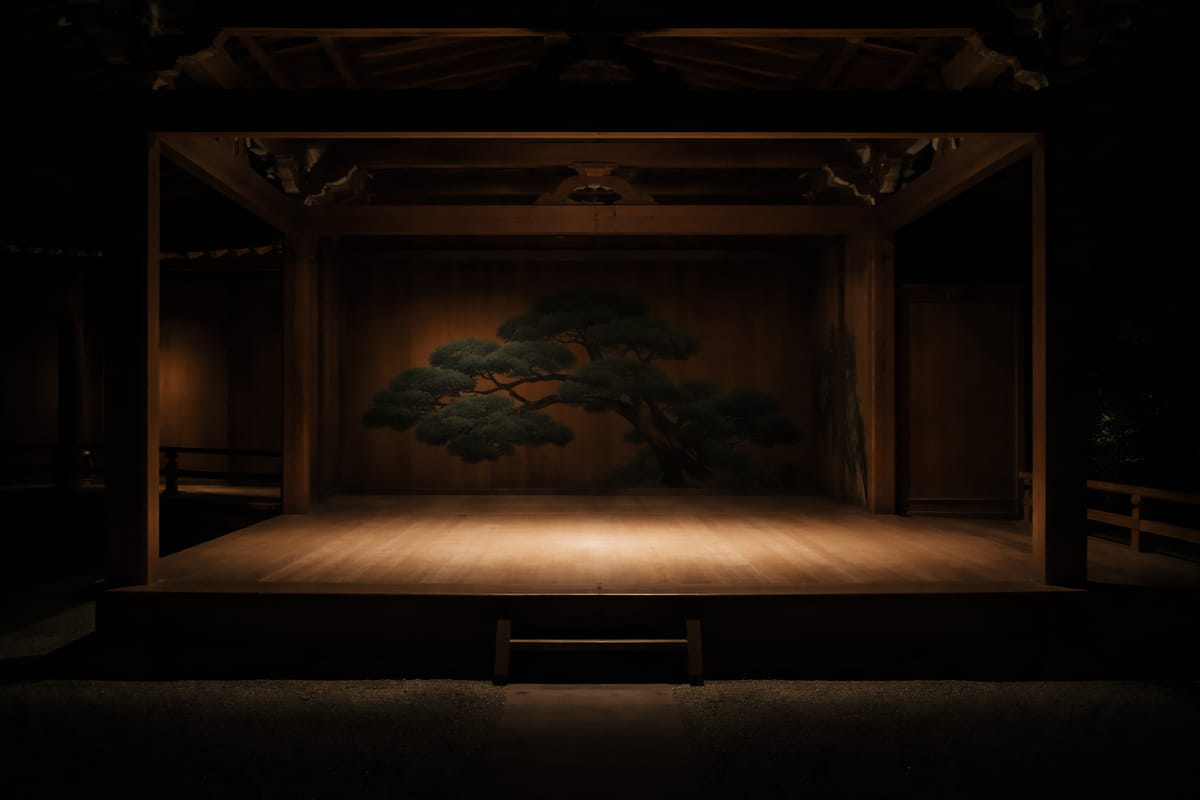
The title of this web magazine, Mugen comes from 「夢幻」, which means "illusionary dream".
Some of you may have heard of "Noh/能" or "Noh-gaku/能楽", which is a kind of a traditional Japanese performance art. The most popular type of "Noh" acts are called "Fuku-shiki Mugen-Noh/複式夢幻能", and was created mainly by "Ze-ami/世阿弥" who is recognized as the most important Noh actor and author in the history.
"複式夢幻能" means an "夢幻/illusionary dream-like" "能/Noh play" with "複式/multiple(mostly two) scenes".
In the first scene, typically a traveling person (mostly buddhist priest) meets a local person (mostly in a figure of an elder person) in the evening, and the local person tells a story related with the location. The local person is actually a ghost and is not alive already, and in the second scene when the night comes, this person appears again with his(her) original appearance when he(she) was alive, and asks for the priest to mourn his(her) death. Finally when the dawn comes, the priest finds himself alone, wondering if what he saw was a dream, or a real thing.
This "illusionary dream" concept deeply attracts the audience to listen to the tale which the ghost tells, along with the priest actor.
I chose this word "Mugen/夢幻" for the title of this web magazine, since this word represents one of the most particular characteristics of what Japanese people feel as a form of beauty.